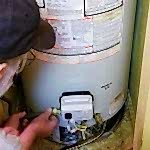

Your current water heater is due for replacement, and while checking the utility closet, you notice a small tank connected to the cold-water line above it. Should that tank remain part of the new water heater installation?
In this guide, Advanced Plumbing & Drain answers the question, “Is an expansion tank required for a water heater?” You will learn how pressure conditions and plumbing design determine whether your system needs this tank.
When Is an Expansion Tank Required for a Water Heater?
In California, an approved expansion tank or equivalent pressure-control device is required when thermal expansion cannot be relieved by water flowing back into the water main. A check valve or backflow preventer can create a closed plumbing system.
Some pressure regulators also block reverse flow. If your plumbing remains open, expanding water may move toward the public supply instead of increasing pressure inside your home.
Tankless water heaters are not automatically exempt. If the plumbing system is closed, California code requires an approved expansion tank or another approved thermal-expansion-control device regardless of the heater type.
How Does an Expansion Tank Handle Heated Water?
Thermal expansion in water heaters occurs because the liquid occupies slightly more space as its temperature rises. In a closed system, even this small increase can strain the heater and connected plumbing. An expansion tank gives the water somewhere to go.
Inside, a rubber diaphragm separates incoming water from a precharged air chamber. Rising pressure pushes expanded water into the vessel and compresses the air cushion. When a hot tap opens, or the system cools, the stored water in the expansion tank flows back into your plumbing.
How Can You Identify a Closed Plumbing System?
Certain components can reveal whether expanding water has a path back toward the public supply:
- Inspect the incoming line for a check valve or backflow preventer.
- Find the pressure regulator model and review its specifications for reverse-flow protection.
You can also ask your utility provider whether the meter assembly prevents reverse flow.
Which Signs Can Indicate a Pressure Spike During Reheating?
You may notice these changes while the unit reheats:
- A faucet surges briefly when opened, then returns to its usual flow.
- Pipes near the heater creak or tick while the unit reheats.
- Water drips from the relief discharge pipe when no fixture is running.
These symptoms are not conclusive, so ask a plumber to test the water pressure.
How Does a Plumber Size and Install an Expansion Tank?
If an expansion tank is required, a plumber selects and installs it based on the following factors.
Choose the Tank Capacity
A plumber starts with the heater’s capacity and expected temperature rise. Static supply pressure also affects how much expansion the tank must absorb.
Set the Air Precharge
Before installation, the plumber measures your home’s static pressure and adjusts the air precharge to match it. This setting must follow the manufacturer’s instructions for that model.
Position and Support the Tank
Many models connect to the cold-water supply near the heater. A plumber follows the manufacturer’s mounting requirements and adds support so the filled tank does not strain the pipe.
What Does the Heater’s Safety Valve Do?
The temperature and pressure relief valve opens when conditions inside the tank become unsafe. It releases hot water or steam to reduce the risk of rupture, so never cap or block its discharge pipe.
By contrast, water heater pressure regulation keeps the system within its normal operating range instead of responding only to an emergency. Review these water heater maintenance tips for routine checks you can complete between professional visits.
Plan Your Water Heater Upgrade With Advanced Plumbing & Drain
Before replacing your water heater, confirm whether your plumbing has an open or closed configuration. Advanced Plumbing & Drain checks this setup before installing a new unit. We can also help determine the right water heater size before selecting a model.
Call (415) 744-4944 to plan your installation today.
Frequently Asked Questions
These questions address installation conditions and equipment compatibility.
Can a Water Heater Expansion Tank Freeze?
Yes, an expansion tank can freeze in an unheated area, so it must stay within the manufacturer’s approved temperature range.
Can a Boiler Expansion Tank Be Used With a Water Heater?
Only a potable-water-rated tank can be used. Standard boiler models are designed for closed heating systems.
Is an Expansion Tank Required for a Water Heater With a Thermal Relief Valve?
Not always. A thermal expansion relief valve may be an approved alternative when the local authority accepts it and the discharge is routed correctly.
Meet Our Founder: Nick, Master Plumber & Owner
Nick is the owner of Advanced Plumbing & Drain, bringing years of professional plumbing expertise to the San Francisco Bay Area. Driven by core values of integrity and exceptional craftsmanship, he leads a fast-growing team specializing in comprehensive residential and commercial repairs, drain cleaning, and water heater solutions. Nick is dedicated to ensuring every job is completed right the first time, earning long-term trust across San Francisco and San Mateo County.